Guide
Triple Glazing: Worth It or Expensive Overkill?
The honest answer depends on the whole window, how it is installed, where it faces and what the rest of the house is doing.
- By
- Home Editorial, Home by Milestone
- Published
- 22 September 2026
- Reading time
- 5 min read

Building Performance · Design · Energy Efficiency · Passivhaus
Double versus triple glazing is the wrong starting question. Frames, installation, orientation, solar gain and comfort all shape whether a window performs.
"Should we go triple glazed?" It is one of the most common questions anyone planning a new home or renovation asks. It sounds like it should have a simple answer. It does not — but the reasons why are genuinely useful, and they lead to better decisions whichever way you go.
Double and triple glazing
A double-glazed unit has two panes of glass separated by a sealed cavity; triple glazing has three panes and two cavities. The cavities are usually filled with an inert gas, and the glass typically carries a low-emissivity coating that reflects heat back into the room.
More panes and cavities generally mean less heat loss through the glass. Triple glazing also tends to be heavier, which affects frame design, hardware and installation, and it can admit slightly less daylight and solar heat than double glazing, depending on the coatings chosen.
Understanding U-values
A U-value describes how easily heat passes through a building element — the lower the number, the better it insulates. For windows, there are several U-values you might see:
- Centre-pane U-value (Ug): the glass alone, measured away from the edges. This is usually the most flattering figure.
- Frame U-value (Uf): the frame alone.
- Whole-window U-value (Uw): the combined performance of glass, frame and the spacer at the edge of the glazing unit. This is the number that best reflects how the window actually performs.
When comparing products, make sure you are comparing like with like. A window with excellent glass and a weaker frame may perform less well overall than its glazing figure suggests — particularly smaller windows, where the frame is a larger proportion of the total area.
Why frames matter
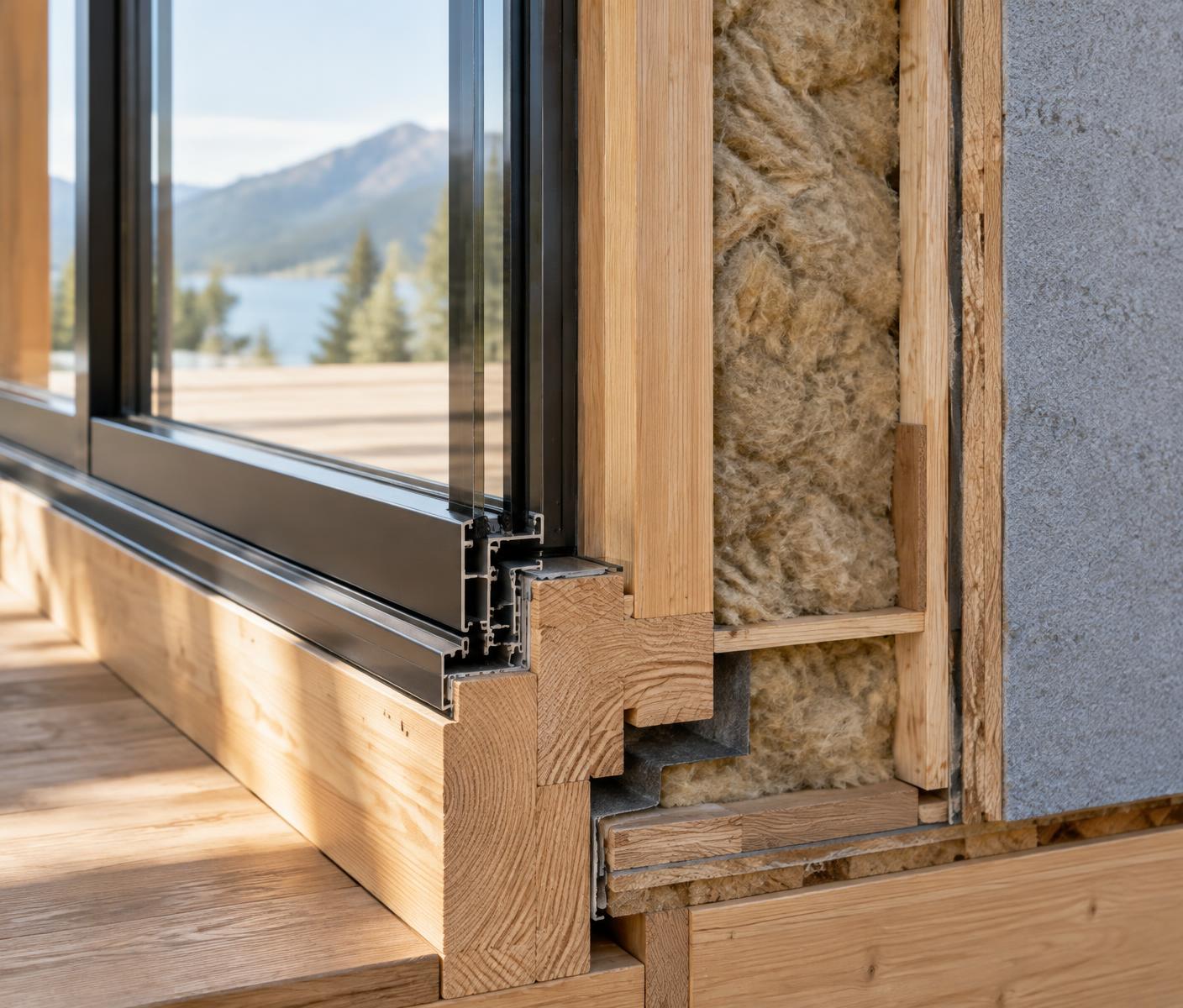
The frame is often the weakest thermal part of a window. Its material, depth, internal construction and how much of it is visible all influence performance. The spacer — the strip that separates the panes at the edge of the unit — also matters: "warm edge" spacers reduce heat loss and help keep the glass edge warmer.
Windows designed for very high-performance buildings tend to have deep, well-insulated frames and are often certified for use in Passivhaus projects, where the Passive House Institute sets demanding criteria for window performance.
Surface temperature and comfort
This is the benefit most people underestimate. On a cold day, the inner surface of poorly insulating glass becomes cold. You feel it as a chill when you sit near the window, and it can create a downdraught as air cools against the glass and falls. The room feels colder than the thermostat says.
Better-insulating glazing keeps the inner surface warmer. That can make it comfortable to sit right next to a large window in winter — which, in a home designed around views and daylight, is a real quality-of-life improvement, not just an energy statistic.
Solar gain and orientation
Windows do not just lose heat — they gain it from the sun. Glass lets in solar energy, which can usefully warm a house in winter but can cause overheating in summer.
This makes orientation central to window decisions:
- South-facing glazing can collect useful winter sun, but needs appropriate shading to prevent summer overheating.
- East- and west-facing glazing receives low-angle morning and evening sun that is harder to shade and can contribute significantly to overheating.
- North-facing glazing receives little direct sun, so heat loss tends to dominate.
The coating and specification can be tuned for each orientation. In some projects, a well-shaded south elevation might use glazing that admits more solar energy, while west elevations use solar-control glass. England's Approved Document O addresses overheating risk in new homes, and glazing area and shading are key to it.
Installation: where good windows fail
Here is the uncomfortable truth: an excellent window badly installed can undermine the performance you paid for.
The junction between window and wall is complex. It must be:
- insulated, so heat does not bypass the frame around the edge
- airtight, sealed continuously to the building's airtight layer on the inside
- weathertight, protected against wind-driven rain on the outside
- structurally secure, carrying the weight of heavier glazing properly.
The position of the window within the wall also matters. Setting the frame in line with the insulation layer, and over-insulating the frame edge where possible, generally reduces the thermal bridge around the opening. Getting this wrong creates a cold, potentially leaky strip around every window — sometimes enough to cause condensation at the reveal.
“Specify the installation with the same care as the window.”
Specialist tapes and membranes, careful detailing and fitters who understand airtightness all make a difference. See Airtightness: The Invisible Detail That Changes Everything and Thermal Bridges.
So — worth it or overkill?
It depends on the project. Triple glazing tends to make most sense when:
- the rest of the fabric is highly insulated and airtight, so windows would otherwise be the weak point
- the house has large areas of glazing, where comfort near the glass matters
- the project is aiming for Passivhaus or a similar low-energy standard
- the windows will be in place for decades, so long-term performance outweighs initial cost.
High-quality double glazing may be a reasonable choice where the rest of the fabric is modest, where heritage constraints limit frame depth, or where budget is better spent elsewhere first — for example on airtightness or insulation. In either case, installation quality and orientation-led design will make a larger difference than the number of panes alone.
Questions to ask
- What is the whole-window U-value for our window sizes?
- How will the windows be positioned in the wall and sealed to the airtight layer?
- Is the glazing specification varied by orientation?
- How will we manage summer overheating on east, west and south elevations?
- Who is responsible for the installation detail — supplier, builder or designer?
At Home, you can compare window and door systems side by side, see frame sections and installation details up close, and talk to specialists about your project.
Last updated 25 September 2026
Key takeaways
What to remember.
- 01Glass is only part of a window: frame, spacer and installation all affect performance.
- 02Compare whole-window U-values, not centre-pane figures.
- 03Warmer inner glass surfaces improve comfort, especially near large windows.
- 04Orientation and solar gain can matter as much as the glazing specification.
- 05A very good window installed badly can perform worse than a modest window installed well.
Explore at Home
Put the knowledge in context.
Relevant members at Home
Next step
Experience the ideas in person.
Explore products, systems and expertise together at Masson Mills.